
Lev Meshberg Ukrainian/American, 1933-2007
-
 Still Life with Bottle, 1992
-
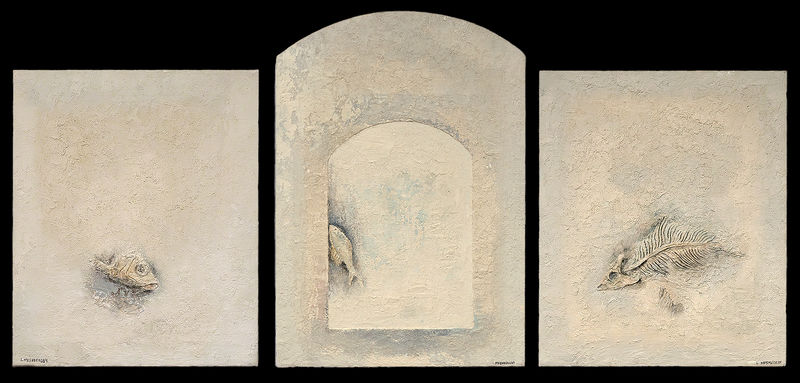 Still Life with Fish Triptych, 1984
-
 Still life with Fruit, 1983
-
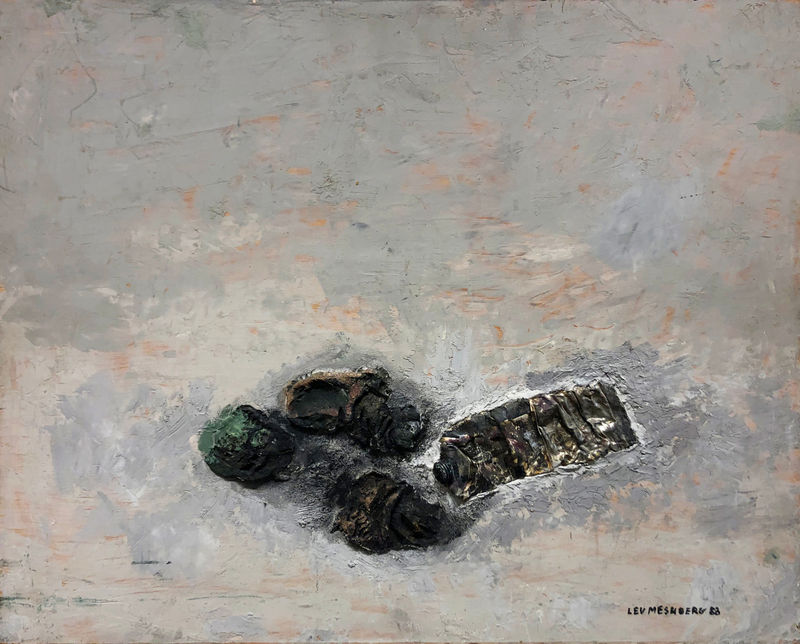 The Birth of Creativity, 1983
-
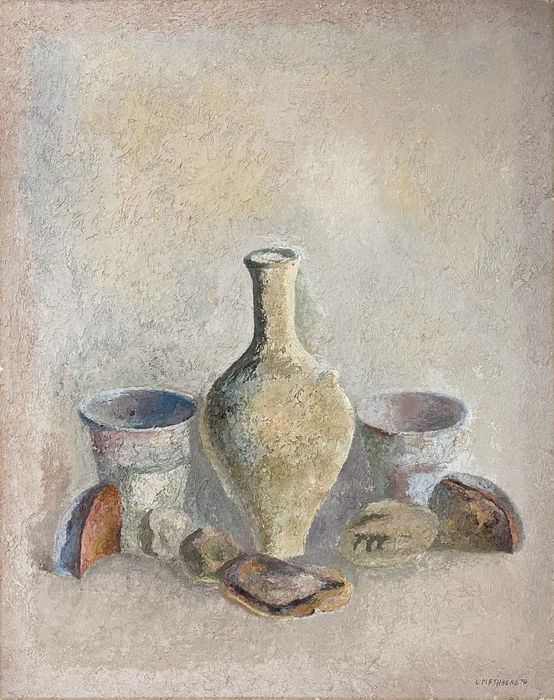 Morning Still Life, 1979
-
 Still Life with Potatoes, 1979
-
 Seascape, 1978
Lev Meshberg’s paintings draw on personal memories and symbols, moving between still life, landscape, and the human figure. Recognizable objects and loosely defined forms appear in diffuse, often dreamlike light. In many works, layers of pigment and encaustic give the surface a physical depth that contrasts with the delicacy of the color.
-
 Still Life with Bottle, 1992
 -
Still Life with Fish Triptych, 1984
-
Still life with Fruit, 1983
-
The Birth of Creativity, 1983
-
Morning Still Life, 1979
-
Still Life with Potatoes, 1979
-
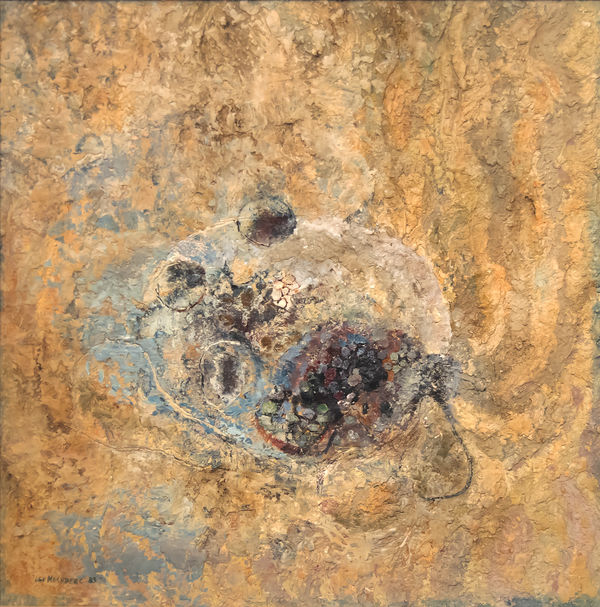
Seascape, 1978




-
Still Life with Bottle, 1992
-
Still Life with Fish Triptych, 1984
-
Still life with Fruit, 1983
-
The Birth of Creativity, 1983
-
Morning Still Life, 1979
-
Still Life with Potatoes, 1979
-
Seascape, 1978
Born 1933, Odessa, Ukraine; died 2007, Carrara, Italy.
Meshberg's enigmatic paintings are largely autobiographical. His still lifes depict both familiar as well as indiscernible objects, with dream-like tonality and ethereal light. Meshberg's paintings have physical depth, achieved through a build-up of matte pigments, encaustic and other materials to create a three-dimensional, sculptural effect. But it is perhaps the luminosity of his pristine colors and the meticulous execution of his paintings that have brought him world-wide admiration and recognition ''[Meshberg is] a wonderful, wonderful painter...," said of him by one of his famous students, the American artist John Currin.
Lev Meshberg started painting and drawing in early childhood. In 1946, he was awarded First Prize at the Ukrainian Annual Art Contest. In 1950, he began to study painting and drawing at the Odessa College of Fine Arts, which he graduated with high honors. In 1967, the Ministry of Culture of the Soviet Union named Meshberg one of the country's six best painters.
Meshberg emigrated to the United States in 1973 to escape the stigma of being an "unofficial" artist during the time when the country's Communist
government demanded that all artists adhere to the style of Socialist Realism. Shortly after his arrival in the U.S., Meshberg's paintings were
exhibited in the Capitol Building Rotunda in Washington, D.C. - the first time such honor has been bestowed upon a foreign artist.
Lev Meshberg's paintings have been exhibited all over the globe and can be found in public and private collections including the Pushkin Museum of Art in Moscow, the State Russian Museum in St. Petersburg, the Tretyakov Gallery in Moscow, the Kiev National Museum of Art in Kiev, the Russian Art-in-Exile Collection in Paris, France; the Nicholas Roerich Museum in New York, and the Museum of Russian Art in Jersey City, USA, among others.